
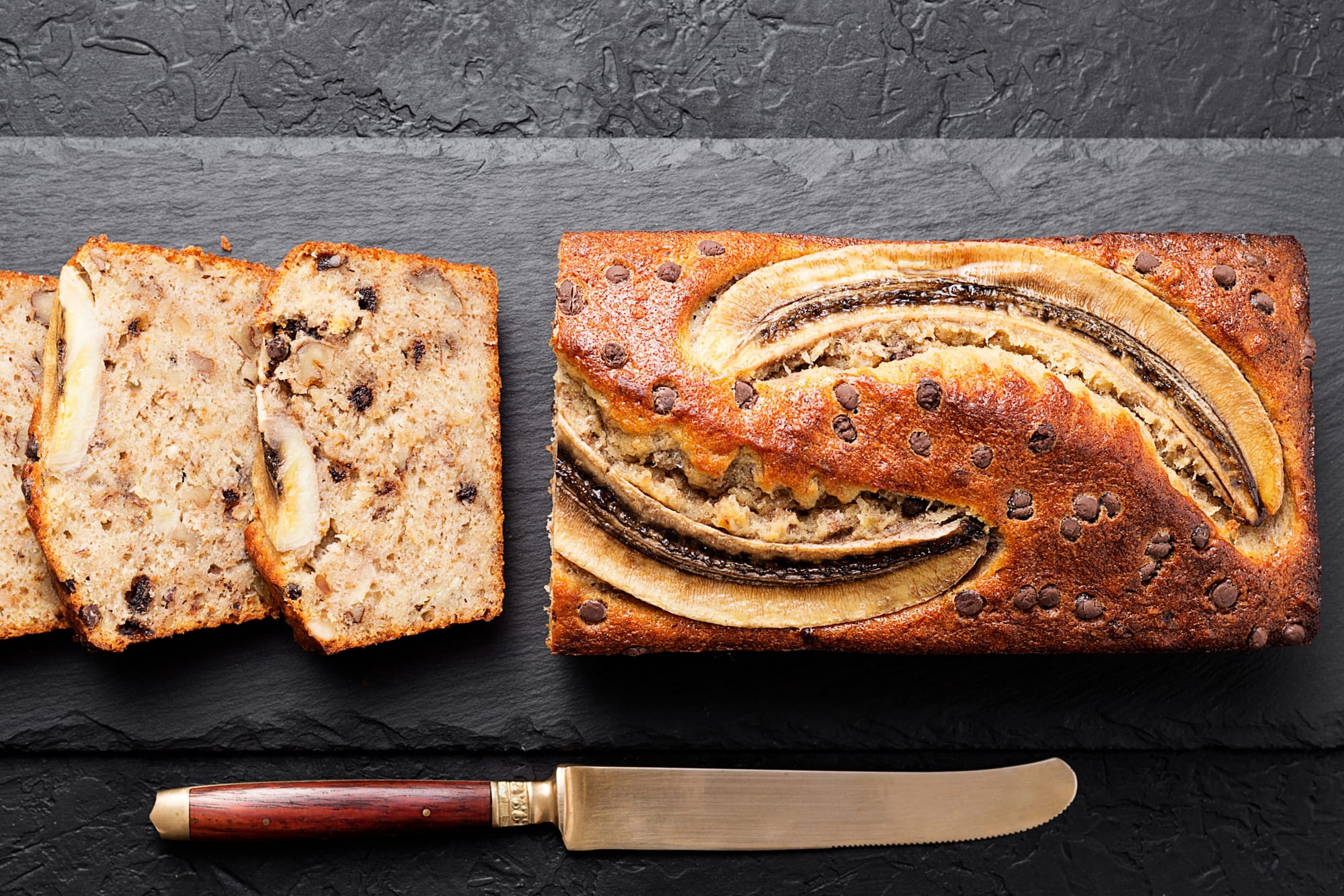
Banana Bread

Be the first to review!
Jump to Recipe
Banana Bread
Banana Bread
Yields:
10
serving(s)
Prep Time:
30 minutes
Total Time:
1 hour
Cal/Serv:
369
Recommended links here are independently selected by our editors. We may earn a commission when you buy something through them.

You can’t put a price on the comfort of a good banana bread. A loaf like this will put a smile on the face of anyone who has it, especially family and friends when they come round. There is nothing like the aroma of it in the oven to fill up the kitchen, a fragrance that is hard to put past. But once you have had your first bite of the soft, moist fruit and its natural sweetness, that is when you are truly won over.

We put our own modern twist on the recipe by using a pressure cooker. It is a fast way to ensure a tender outcome without losing any of the moisture. With this, you can have a fine treat ready in no time and for a little more than what you have on hand in the pantry. Make it for breakfast or a dessert, whatever the occasion, you will find it makes a worthy addition to your regular baking repertoire.

Advertisement - Continue Reading Below

Recipe Information

Ingredients

For:
10
serving(s)
  • 4 ripe bananas
  • 1 pinch salt
  • 4 large eggs
  • 1 tsp vanilla extract
  • 3/4 cup granulated sugar
  • 3/4 cup corn oil, or vegetable oil
  • 2 cup all-purpose flour, sifted
  • 1 tsp baking powder, sifted
  • 1/2 tsp baking soda, sifted
Nutrition Facts
Banana Bread
Serving Size
 
115 g
Amount per Serving
Calories
369
% Daily Value*
Fat
 
19
g
29
%
Saturated Fat
 
2
g
13
%
Trans Fat
 
0.1
g
Polyunsaturated Fat
 
5
g
Monounsaturated Fat
 
11
g
Cholesterol
 
74
mg
25
%
Sodium
 
131
mg
6
%
Potassium
 
224
mg
6
%
Carbohydrates
 
45
g
15
%
Fiber
 
2
g
8
%
Sugar
 
21
g
23
%
Protein
 
6
g
12
%
Vitamin A
 
138
IU
3
%
Vitamin C
 
4
mg
5
%
Calcium
 
41
mg
4
%
Iron
 
2
mg
11
%
* Percent Daily Values are based on a 2000 calorie diet.

Equipments

  • 1 pressure cooker
  • 1 rack (or trivet)
  • 1 lined pan
  • 1 clean kitchen cloth
  • 2 mixing bowls
  • 1 whisk (or hand mixer)
  • 1 fork (or masher)
Advertisement - Continue Reading Below

Directions

  1. Peel the bananas and place them in a bowl with a little salt, then mash until smooth.
  2. Beat the eggs, vanilla extract, and granulated sugar until light and fluffy.
  3. Add the corn oil and mix well.
  4. Add the mashed bananas and mix until well combined.
  5. Add the sifted ingredients and stir again until fully incorporated.
  6. Pour into a lined pan.
  7. Place a clean kitchen cloth in the pressure cooker. Insert the rack and add water.
  8. Place the pan into the pressure cooker and close the lid.
  9. Turn the knob to 'STEAM'. Press 'STEAM' for 30 minutes and turn it ON.
  10. When the pressure cooker beeps, release the steam pressure. When the whistling sound stops, press OFF and slowly open the lid. Let the cake cool before serving.
Advertisement - Continue Reading Below

Frequently Asked Questions

There is no single magic trick to it, really. The secret lies in nailing a few things at once:

  1. Go for the ripest bananas you can find. Pick ones that are well and truly browned or close to black; they will give your baking more sweetness and depth of flavor.
  2. Don’t skimp on the moisture. Things like oil, buttermilk, yogurt, or sour cream are good to have on hand to ensure the bread stays tender.
  3. Find the right mix of butter and oil. Rely on butter for the taste, but put in a little oil to see to the moisture.
  4. Be gentle with your mixing and flour. Measure up carefully and don’t overwork the batter, or you will end up with a loaf that is too dense or dry.
  5. Watch the oven closely. You want to pull it out as soon as a skewer comes out clean. If you let it go too long, it will get dry.
  6. Have some patience and let it rest. Cool it down fully, and if you can, hold off on slicing until tomorrow. The flavors will be better once the moisture has had time to even out.

Stick to these, and you will turn an ordinary recipe into something special.

You won’t find one definitive “secret ingredient” since every baker has his or her own preference. That said, if you want to put some moisture and tenderness in your loaf, most will tell you to work in some sour cream or yogurt. Some like the softness that mayonnaise gives it, while others rely on very ripe bananas for natural sweetness and things like brown sugar, cinnamon, or a bit of lemon zest to round out the flavor. But by and large, the best bet is to call for some sour cream or full-fat yogurt in your recipe.

If you want to put a spin on your banana bread, full-fat sour cream is an excellent single-ingredient fix. Put in roughly ½ cup of it, and the difference is plain to see: the bread comes out with a much more tender, rich quality. That creamy texture is what keeps it soft and moist for days on end. On top of that, the sour cream’s acidity will react with the baking soda to give you a superior rise and a finer crumb while it goes about tenderizing the gluten. Do make sure to cut back a little on any other fats or liquids in the recipe so as not to throw off the batter.

For the most part, banana bread is closer to a cake than something you would call a health food, so it is not well-suited as an everyday snack for diabetics. That said, if you are having a low-carb or low-sugar variety in modest amounts now and then, it can be part of a diet that is friendly to your condition.

The issue with the regular stuff

Traditional banana bread is often made with white flour, plenty of fat, and added sugars. These ingredients pack in the calories and provide carbs that are digested quickly, giving the bread a medium to high glycemic load. Eat too much of it, and you will see your blood sugar spike.

And what of the bananas themselves?

They do contain natural sugars, and how they affect your blood sugar depends on their ripeness. A very ripe banana is going to be sweeter, whereas one that is less ripe has more resistant starch and fiber, so it won’t raise your levels as fast.

Is there a way to make it work?

There are recipes out there that will suit you better. Some call for almond or other nut flours and hold back on the sugar, bringing the net carbs down to some 6g per slice and the glycemic index to about 27.

Tips for having it without trouble

  • Don’t make it a daily habit; think of it as a dessert for special occasions.
  • Stick to a thin slice.
  • Have it with some protein or healthy fats to keep your blood sugar from running wild.
  • Look for versions with whole grains and no added sugar.

All in all, you don’t need to avoid banana bread entirely, but for a diabetic, the standard kind is far from ideal. Make sure it is a diabetes-friendly version, and you keep your portion in check.

If you want your banana bread to be on the fluffier side, it is a matter of getting the right balance in your ingredients and working some air into the mix. Here are a few ways to do it:

  1. On leavening: Make sure your baking soda or powder is fresh. For a lighter crumb, put your baking soda to work with something acidic, such as sour cream or yogurt.
  2. How you mix: Start by creaming the butter and sugar or whisking up the oil, eggs, and sugar until they are pale and have some volume. When the flour goes in, don’t overdo it; a little mixing to bring it together is enough. You don’t want to develop any gluten, or you will end up with a dense loaf.
  3. The flour: Stick with all-purpose or cake flour. Bread flour will form too much gluten and give you a chewy texture instead.
  4. Moisture: Very ripe bananas are best for the sweetness, but don’t let the moisture content get out of hand, or the bread turns gummy. A touch of dairy is fine to add moisture without weighing down the batter.

Put simply: use good leavening and ripe fruit, be gentle when you fold in the flour, and make sure to properly cream your wet ingredients for the fluffiest results.

You are better off with baking soda for your banana bread. It will do a good job of reacting to the acidity of the ripe bananas and the like, which in turn gives you an intense banana flavor along with a nice rise and moist crumb. You will see some recipes put in a little baking powder on top of the soda to further improve the texture and lift.

In a pinch, you can use baking powder in place of the soda, though you have to be liberal with it and use three or four times as much. Expect the loaf to come out a bit lighter in color and the flavor to be more subdued, not to mention the banana scent won’t be as strong. If the recipe is written for baking soda, don’t just make a straight swap with baking powder without changing the quantities; it will show in the taste and texture. To get the best from your bread, stick to a recipe that has you using baking soda with plenty of ripe fruit and an acidic dairy such as buttermilk or yogurt.

When you want your banana bread to have the right texture and flavor, stick with brown sugar for the most part, be it light or dark. The moisture and that deep, caramel note it brings out are a good match for the ripe bananas. You could put in an even split of white and brown if you like a lighter crumb, but don’t want to forgo the depth entirely.

Then again, leave the powdered sugar out of the batter. It has a way of changing the consistency and will give you a loaf that is too sweet and cakey for our liking.

Advertisement - Continue Reading Below

Reviews

Rating: 0 out of 5 stars
0 from 0 ratings
Subscribe
Notify of
guest
0 Reviews
Newest
Oldest Most Liked
Advertisement - Continue Reading Below
chevron-downchevron-right